
Camping Griddle vs. Campfire Grate vs. RV Stove
A camping griddle, a campfire grate, or the RV's built-in stove? We're renting an RV for Labor Day weekend and deciding how we'll cook. Here's our honest comparison.
Carlos Lopez
7/2/20264 min read
What's the Best Way to Cook on an RV Camping Trip?
For most RV trips, a portable propane griddle is the most versatile way to cook — it handles breakfast through dinner, works in burn bans, and doesn't heat up the rig. But a campfire grate is cheaper and more fun, and the RV stove is already there. We're weighing all three before our Labor Day trip.
As an Amazon Associate I earn from qualifying purchases.
Here's the situation. Nancy and I rent RVs — we don't own one yet — and we've got our first rental booked for Labor Day weekend, the trip that almost didn't happen. Which means we're facing the question every RV renter hits about a week before departure: how are we actually going to cook out there?
We've been researching this for weeks, partly because we like eating and partly because two dogs (Macie and Mindy) supervising every meal raises the stakes. This post is our working comparison — what we're considering, what each option honestly costs and trades away, and what we're leaning toward. After the trip, we'll come back and tell you what actually happened.
The Three Options, Defined
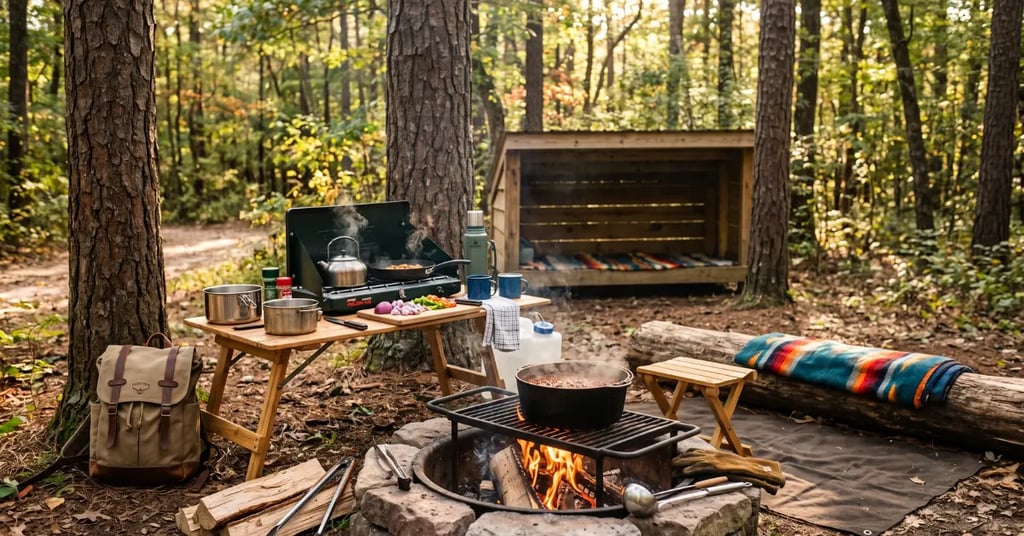
A camping griddle is a flat steel cooking surface, usually propane-fired, that sits on a table or stand — think diner flat-top, shrunk down for a picnic table. A campfire grate is a metal grill surface that sits over an open fire. And the RV stove is the built-in propane range inside the rig — the one that comes free with the rental.
Option 1: The Camping Griddle
Our pick: the Blackstone OTG 22 Inch Tabletop Griddle in our Campsite Griddles & Accessories list
This is the option the internet screams at you. And honestly, the case is strong:
It cooks everything. Pancakes, smash burgers, fajitas, eggs that don't fall into a fire — a flat top doesn't care what you throw at it.
It works during burn bans. Late summer in Tennessee, this is not hypothetical. If the campground bans open fires, the griddle keeps cooking.
It keeps heat (and bacon smell) out of the RV. More on why that matters below.
It's the same tool at home. We'd use it on the patio between trips, so the cost isn't trapped in "camping gear we use twice a year."
The honest downsides: it's the most expensive option of the three, it's around 40 pounds of steel to haul in a rental with limited storage, and cast-steel griddles need seasoning and care. As renters, that last one is a real consideration — this would be our griddle to maintain, not the rental company's problem.
Option 2: The Campfire Grate
Our pick: the Adventure Seeka 24" Heavy Duty Folding Campfire Grill in our Camping Vibes list
This is the romantic option, and we're not immune. Cooking over a real fire is half the reason people go camping. It folds flat, it's the cheapest of the three by a wide margin, and there is no propane to buy, store, or run out of at 7 a.m.
But the tradeoffs are real:
Fire cooking is a skill we haven't built yet. Heat control over coals is an art. First RV trip is maybe not the semester to enroll.
Burn bans kill it entirely. No fire, no dinner plan.
It's slow. Building a fire to cooking-coals takes an hour-plus. Great for a lazy Saturday dinner, rough for "we need breakfast before the hike."
Our current thinking: the grate isn't the primary plan, but at ~$77 it might come along anyway for one designated fire-cooked dinner. S'mores negotiations with the dogs are ongoing.
Option 3: The RV Stove (Plus a Backup Burner)
The rental comes with a built-in propane stove, and it costs us nothing. That matters. For coffee, boiling pasta water, and rainy-day cooking, the RV stove is genuinely the right tool.
So why is anyone buying anything? Two reasons we keep running into in our research:
Cooking inside a small rig turns it into a sauna that smells like dinner for two days. Every RV forum says some version of this. In late-summer Tennessee heat, running a stove inside sounds miserable.
Rental stoves are an unknown. We won't know until pickup day whether the burners are strong, weak, or temperamental.
That's where a standalone propane burner comes in. Our pick: the Coleman Triton 2-Burner Propane Stove in our Camping Propane Burners list. It's basically the RV stove, relocated to the picnic table — familiar burner cooking, outside, for well under $100. It's the "we know how to use a stove" safety net.
So What Are We Actually Doing?
Here's where we've landed, at least until the trip proves us wrong:
The griddle is the lead choice, with the RV stove as the built-in backup. The versatility-plus-burn-ban-insurance argument is hard to beat, and the fact that it stays useful at home between rentals makes the price easier to swallow. The Coleman burner is the budget alternative if we chicken out on the griddle price this close to the trip, and the campfire grate is the fun add-on if the campground allows fires.
Ask us again in September. We'll have grease stains, opinions, and probably a few of our funny RV shirts sacrificed to bacon splatter.
FAQ
What is the best camping griddle?
For most campers, a 17–22 inch tabletop propane griddle hits the sweet spot of cooking space versus portability. We chose the Blackstone OTG 22 Inch Tabletop Griddle for our trip because 22 inches feeds two people and two begging dogs without taking over the whole picnic table. We'll report back on how it performs.
Is a griddle or a grill better for camping?
A griddle is more versatile for full meals — breakfast foods, small items, and anything saucy stay on a flat top instead of falling through grates. A grill (or campfire grate) wins on flavor for steaks and burgers and works without propane. If you can only bring one, the griddle covers more meals.
Can you use a griddle during a burn ban?
Usually yes — most burn bans restrict open flames and wood fires but allow contained propane appliances like griddles and camp stoves. Always confirm with the specific campground, because rules vary by location and severity of the ban.
Do you need to bring a stove if the RV has one?
Not strictly — the built-in stove works fine. But many RVers prefer cooking outside to keep heat and food smells out of the living space, and a portable propane burner or griddle makes that possible. As first-time renters, we're bringing an outdoor option so we're not dependent on an unfamiliar stove.
© 2026 Horacio & Visconti. All rights reserved.