
Best Budget Camping Tents
We travel by RV, but our friends and their kids tent camp right beside us. Here are the best camping tents we've picked for the crew — including budget picks.
Carlos Lopez
7/17/20268 min read
What Is the Best Camping Tent?
For most campsite tent camping — families, groups, casual weekend trips — the best camping tent is an affordable 4-person instant tent with blackout fabric, like the EVER ADVANCED 4 Person Blackout Camping Tent. It sets up in about 60 seconds, blocks morning sunlight so kids sleep past dawn, and costs far less than premium cabin tents.
As an Amazon Associate I earn from qualifying purchases.
Everything in this post lives in our RV Campout Tent Picks storefront if you want to browse the full list.
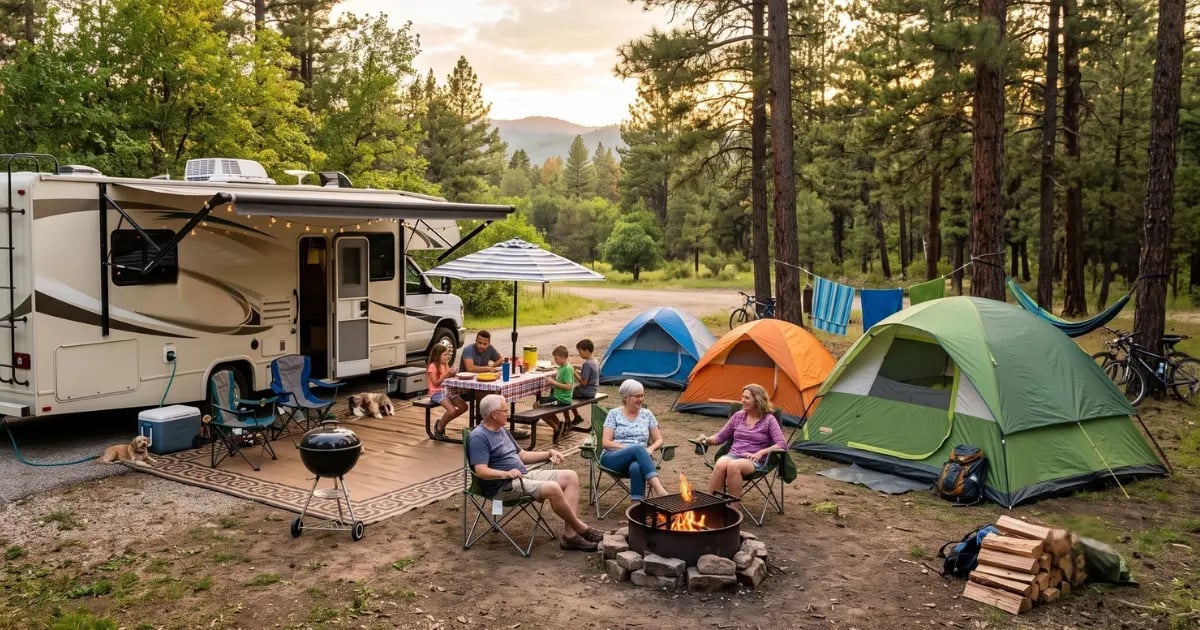
We're the RV people. When our group heads out, Nancy and I are in the rental rig with Macie and Mindy — and the dogs made it clear a long time ago that the RV is theirs. The tents? Those are for the humans traveling with us.
Here's how our trips actually work: we book the RV, our friends bring their kids, and everybody wants to camp together. The kids especially. There's something about a tent twenty feet from the campfire that beats any bunk in a rig. So over the past year of planning group trips — including a Maquoketa Caves weekend we've been mapping out — we've done the homework on the best camping tents for the crew that pitches next to us.
We're not gear testers with a warehouse of fifty tents. We're the people who pay attention to which tents go up in two minutes and which ones cause an argument at dusk. This guide covers what we've picked and why — for families, for budgets, and for the one friend who wants their own space. Every pick here comes in well under $500, because you don't need to spend more than that for solid campsite camping.
Let's break it down by who's sleeping where — and what each one costs.
Best Family Camping Tent for the Campsite
Our pick: EVER ADVANCED 4 Person Blackout Camping Tent — around $150
When friends bring kids on an RV campout, the setup that works is one tent per family unit — parents and kids together, pitched close to the rig. For that, we chose the EVER ADVANCED 4-person for our picks list, and two features drove the decision.
First, the 60-second setup. We've seen enough campsite tent assembly to know that the tent going up fast is the difference between "we're camping!" and thirty minutes of pole confusion while the kids orbit impatiently. Pre-attached poles mean the frame unfolds and locks — no threading, no diagram-squinting.
Second, the blackout fabric. This is the sleeper feature (literally). Regular tents glow like a lantern at 5:45 a.m. and every kid inside wakes up with the sun. Blackout material keeps the interior dark, which means the kids sleep in — which means the parents sleep in — which means everyone at the campsite is happier by breakfast.
A note on sizing, because tent capacity ratings are optimistic: a "4-person" tent sleeps two adults and two small kids comfortably, or three people with gear. That's the honest math. If your group includes a family of five or more, or a family doing a tent-only trip without an RV as home base, size up to a 6-person or larger — we sort those out in our guide to the best budget family tents.
What Is the Best Budget Camping Tent?
The best budget camping tent for campsite use is the Forceatt Camping Tent, available in 2, 3, and 4-person sizes for under $100. It's a classic dome design with a full rainfly and simple two-pole setup — everything a casual camper needs and nothing they'd pay extra to skip.
Here's the thing about budget tents that most gear guides get wrong: they review cheap tents for backpackers, when the person actually searching for a cheap or affordable camping tent is usually someone like our friends — camping two or three weekends a year, sleeping next to a car or an RV, and completely unwilling to spend $400 on something that lives in the garage 350 days annually.
For that camper, the Forceatt is the right kind of cheap. You get:
A full-coverage rainfly, which is the one thing you should never compromise on. Plenty of budget tents skimp here with a small cap fly that leaves the walls exposed — fine until the first real storm, miserable after. The Forceatt's fly extends down over the tent body, which is why it made our list over cheaper options.
A simple dome structure with two poles. Fewer poles means fewer things to break, lose, or fight with. Dome tents also handle wind better than tall cabin-style tents — worth knowing if your campground is open and exposed.
Size flexibility. The 2-person version works for a solo camper or a couple traveling light; the 4-person gives a small family the same one-tent-per-unit setup as our main pick at a lower price.
What you give up at this price: standing headroom, fancy vestibules, and gear lofts. For a crew that spends daylight hours outside the tent anyway — hiking, cooking, sitting around the fire — none of that matters much. The tent's job is to keep you dry and let you sleep. This one does both without making your wallet cry.
What Makes a Camping Tent Comfortable?
A comfortable camping tent is one that keeps you dry, lets you sleep past dawn, and gives you enough room to move without knocking the walls — comfort at the campsite is about sleep quality and space, not luxury features. Three things move the needle most, in our experience watching what works for the tent crew.
Dark interiors. Blackout fabric is the single biggest comfort upgrade for anyone camping with kids — it's why the EVER ADVANCED tops our list. A dark tent buys everyone an extra hour or two of sleep.
Honest floor space. The most comfortable camping tents give you a size up from your headcount, so gear isn't crowding sleepers. Rate a tent one person smaller than the box claims and you'll actually be comfortable.
A full rainfly and a bathtub floor. Nothing ruins comfort like a wet sleeping bag. Weather protection is comfort, even on a clear-forecast weekend.
A Tent of Their Own
Our pick: Kelty Late Start Two-Person Tent — around $240
Every group campout has one: the older kid who's outgrown sharing a tent with their parents, or the solo friend who joins the trip and deserves better than being third-wheeled into someone else's tent. For them, we picked the Kelty Late Start — a compact tent for one kid or a solo friend who wants their own space at the campsite.
Kelty's "quick corner" pole design makes this one genuinely fast to pitch — the corners snap into place instead of requiring threaded sleeves, so even a twelve-year-old setting up their first solo tent can manage it (with adult supervision on the stakes). It's a two-person tent, which in real-world terms means one person plus their gear sleeps comfortably, with room to sprawl.
It's the most expensive small tent on our list, and that's deliberate. This is the tent that gets used hard — dragged to the corner of the campsite, set up and torn down by inexperienced hands, treated like a fort. Kelty's build quality (aluminum poles, quality zippers) means it survives that treatment where a bargain tent wouldn't. Cheaper small tents exist; this is the one we'd trust a kid with.
Don't Forget the Sleeping Bags
Here's a lesson from planning our group trips: the RV crew always has bedding covered — the rig comes with beds, and the dogs come with opinions about who sleeps where. The tent crew? They remember the tent and forget the bags until 9 p.m. the first night, when the temperature drops fifteen degrees past anyone's expectations.
So our picks list includes two sleeping bags, chosen for two different sleepers:
FARLAND Sleeping Bag for Adults — around $60. The all-rounder. Rated for cold weather but comfortable in three-season use, and priced so you can outfit a whole family without spending more on bags than on the tent. If your camping season is spring through fall at established campgrounds, this covers it.
Guide Gear Sleeping Bag — around $105. The warm one. When your trips stretch into late fall — or your campground sits at elevation where summer nights still bite — this is the bag for the sleeper who runs cold. Roomier cut, heavier fill, built for the person who has been cold in a tent once and refuses to repeat the experience.
One honest tip either way: whatever bag you buy, check its comfort rating against your actual overnight lows, not the daytime forecast. The number on the bag is usually a survival rating, not a comfort rating. Add 10–15 degrees to whatever the tag claims and you'll sleep fine.
How to Choose a Tent (When You're the RV People Advising the Tent People)
We've become the group's unofficial gear consultants — it happens when you're the ones organizing the trips. Here's the advice we actually give when a friend asks which tent to buy:
Size up from the rating. A tent's person-rating assumes sleeping-bag-to-sleeping-bag with zero gear inside. Real comfort is the rating minus one. Family of four? Look at 4-person tents only if the kids are small; otherwise think bigger.
Buy the rainfly, not the tent. Weather protection is the whole job. Full-coverage rainfly, taped seams, a bathtub-style floor that wraps a few inches up the walls. Everything else is a nice-to-have.
Setup speed matters more than you think. You will set this tent up tired, in fading light, with hungry people waiting. Instant and quick-pitch designs cost a little more and earn it back on the first trip. If a tent needs a manual after the second use, it's the wrong tent.
Match the tent to your actual trips. Two weekends a year at a state park campground? A budget dome is genuinely all you need — don't let a gear guide talk you into alpine-grade equipment for car camping. Camping monthly, spring through fall? Spend up for durability and comfort features like blackout fabric.
Don't blow the whole budget on the tent. Bags, pads, and a headlamp per person matter as much as the shelter. A great tent with no sleeping pad is still a bad night.
Conclusion
Planning trips like our Maquoketa Caves weekend has taught us the formula: the right people, a good campsite, and gear that stays out of the way. The RV handles our part. The tents handle everyone else's. And when it all works — kids asleep in a blackout tent, friends around the fire, Macie and Mindy patrolling the perimeter of what they firmly believe is their territory — that's the kind of trip everybody talks about for a year.
Once camp is set, the next question is dinner — and we have strong opinions there too. Here's our take on griddle vs. campfire cooking at the campsite, because feeding a whole group is its own adventure.
And if your crew wants to look the part around that fire, our funny RV and camping shirts are made for exactly these trips.
Browse the full gear list anytime: RV Campout Tent Picks on our Amazon storefront.
Frequently Asked Questions
What are the best tents for camping? The best tents for camping depend on who's sleeping in them. For a family at a campground, an instant blackout tent like the EVER ADVANCED 4-person is the strongest all-round pick; for a tight budget, the Forceatt dome does the job for under $100; and for a solo camper or older kid, the Kelty Late Start is a durable small tent. Match the tent to your trip, not to the biggest spec sheet.
What is the best tent for camping? For most campsite camping — parked near your car or RV, weekend trips, camping with kids — the best single tent is a 4-person instant tent with blackout fabric. It goes up in about a minute and keeps the interior dark so everyone sleeps in. That's why the EVER ADVANCED 4-person is our top overall pick.
Who makes the best tents for camping? There's no single best brand — it depends on your budget and trip. We've landed on EVER ADVANCED for fast-setup family tents, Forceatt for affordable dome tents, and Kelty for durable small tents that survive hard use. Each earns its place for a different kind of camper rather than winning outright.
Who makes the best camping tents? For budget-friendly campsite camping, the makers we keep coming back to are Forceatt (affordable dome tents) and EVER ADVANCED (instant blackout tents). If you want a small tent built to take abuse, Kelty is worth the step up in price. The "best" maker is the one whose tent fits how you actually camp.
© 2026 Horacio & Visconti. All rights reserved.