
Boondocking for Beginners: What to Know Before Your First Night Off-Grid
Never boondocked before? Neither had we. Here's what we learned about dry camping, finding free sites, managing power and water, and actually sleeping through the night.
Carlos Lopez
4/15/20267 min read
Boondocking for Beginners: What to Know Before Your First Night Off-Grid
The first time we seriously looked into boondocking, we had about fifteen browser tabs open and still were not sure what we were allowed to do, where we were allowed to go, or whether our rig could handle a night without hookups. Most guides are written by people who have been doing this for years and tend to skip the part where you do not know what you do not know yet. This one starts there.
This post contains affiliate links. As an Amazon Associate, Horacio & Visconti earns from qualifying purchases at no extra cost to you.
What Is Boondocking, Exactly?
Boondocking means camping without hookups. No shore power, no city water connection, no sewer. Your RV runs entirely on its own systems — batteries, fresh water tank, and holding tanks — for however long you stay.
It goes by a few names. Dry camping is the same thing. Dispersed camping usually refers specifically to camping on public land outside of designated campground areas. Moochdocking is staying in someone's driveway or private property with permission. The word boondocking itself comes from "boondocks" — meaning remote or rural areas — and has become the catch-all term for all of it.
What it is not: it is not illegal, it is not dangerous if you prepare, and it is not only for full-timers with solar setups and lithium batteries. Weekend warriors and newer RVers do it all the time.
Why Bother Boondocking?
The honest answer is cost and views.
RV park fees in 2026 range from $40 to $100+ per night depending on location and season. Bureau of Land Management land, National Forests, and many state-managed areas are free or charge a minimal fee. For a week-long trip that is a real difference.
The less practical answer is that some of the best campsites in the country are not in campgrounds. The sites with the wide-open desert views, the canyon panoramas, the spots where you wake up and there is no one within eyesight — those are almost always boondocking spots. Campgrounds are built for convenience. Boondocking spots are built by whoever found them first.
Where Can You Actually Boondock?
This is the question that trips up most beginners. The short answer is: a lot of places.
Bureau of Land Management (BLM) land — BLM manages about 245 million acres of public land, mostly in the western United States. Most of it allows dispersed camping for up to 14 consecutive days in one spot. No reservation needed, no fee in most areas. Check blm.gov or the BLM app before heading to a specific area.
National Forests — Similar rules to BLM. Dispersed camping is allowed in most National Forests unless posted otherwise. Check with the local ranger district for specific rules, fire restrictions, and road conditions before going.
State-managed public lands — Rules vary significantly by state. Some states have generous dispersed camping allowances, others are more restrictive. Always check with the specific state agency managing the land.
Harvest Hosts locations — A membership program that allows overnight stays at wineries, breweries, farms, and unique venues across the country. No hookups but a genuinely different camping experience. Membership runs around $99/year.
Walmart and Cracker Barrel parking lots — Less glamorous but legitimately useful for one-night stops on a road trip. Always confirm with the specific location manager before parking for the night — not every location allows it and policies change.
What to avoid: camping on private land without permission, parking on roadsides or city streets, and assuming National Parks allow dispersed camping. Most National Parks require designated campgrounds — dispersed camping within park boundaries is the exception, not the rule.
Best apps for finding spots: iOverlander, Campendium, The Dyrt, and Free Campsite are all widely used. Google Maps satellite view is surprisingly useful for spotting pull-offs and forest roads that look like they could accommodate an RV.
The Three Things You Have to Manage Off-Grid
Experienced boondockers manage three systems constantly. As a beginner, just understanding these will put you ahead.
Power
Without shore power your RV runs on its batteries. The stock battery that comes with most RVs is a single 100Ah lead-acid battery — adequate for a night or two of conservative use, not adequate for anything longer. The biggest power draws are air conditioning (too much for most battery setups), the refrigerator, lighting, and charging devices.
For a first boondocking trip, the practical approach is to run the generator for an hour or two in the morning and evening to top up the batteries, and to be conservative with everything else. A portable solar panel is one of the simplest upgrades a newer RVer can make — even a single 100W panel makes a real difference on sunny days.
Turn off lights when you leave a room. Keep the refrigerator closed. Charge devices during generator hours. These habits extend your power significantly.
Water
Your fresh water tank is finite. Class A motorhomes typically hold 75-100 gallons. Class Cs hold 35-60. Travel trailers vary widely. A couple using water normally can burn through 10-15 gallons per day — which means even a 50-gallon tank runs out fast.
The changes that make the biggest difference: shorter showers (or skipping them and using wet wipes), turning off the tap while brushing teeth, and washing dishes in a basin rather than running the tap. Fill the tank completely before leaving and carry a few gallons of backup drinking water in jugs.
Tanks
Your gray tank holds sink and shower drain water. Your black tank holds toilet waste. Both fill faster than you expect when you are actually monitoring them.
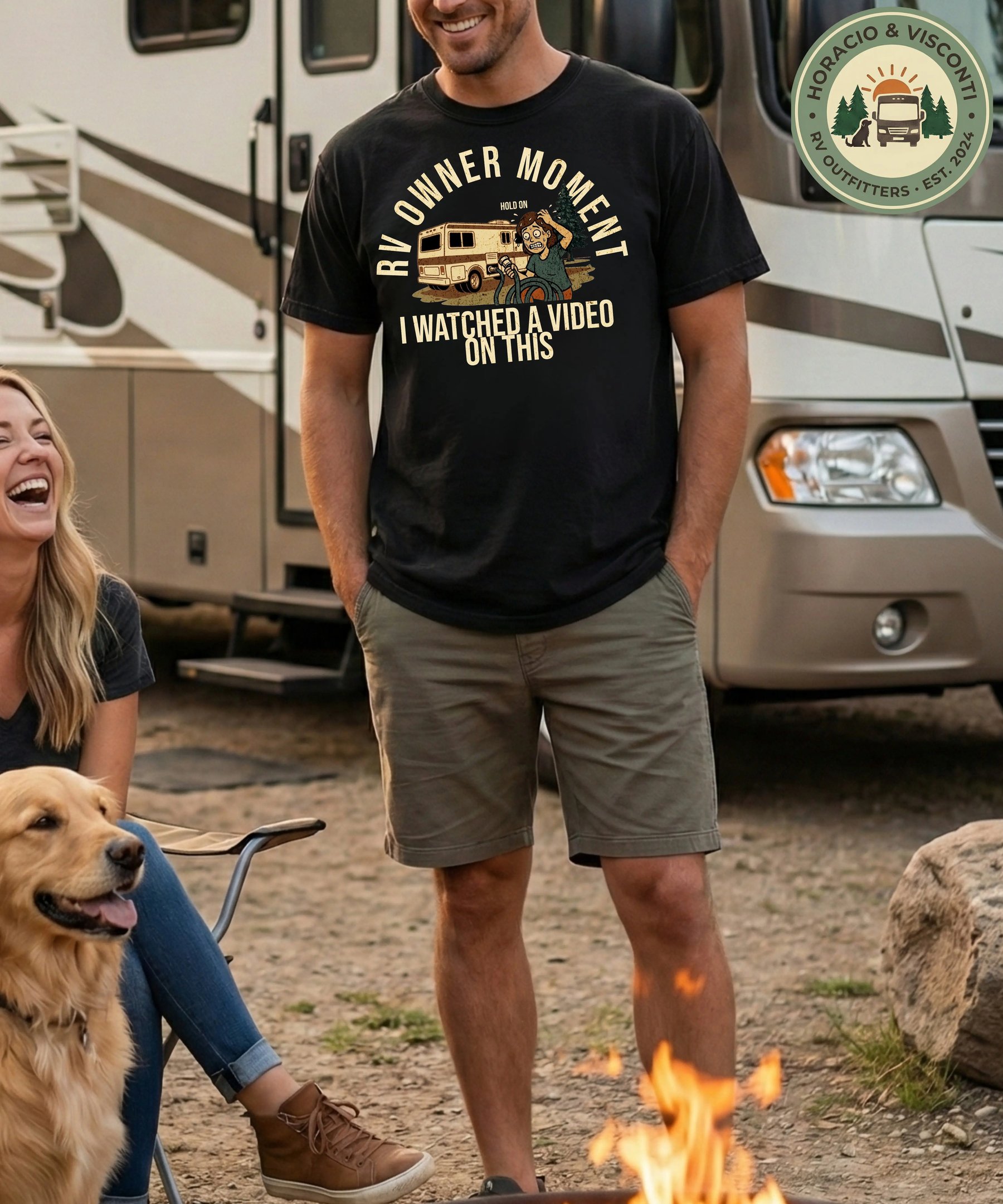
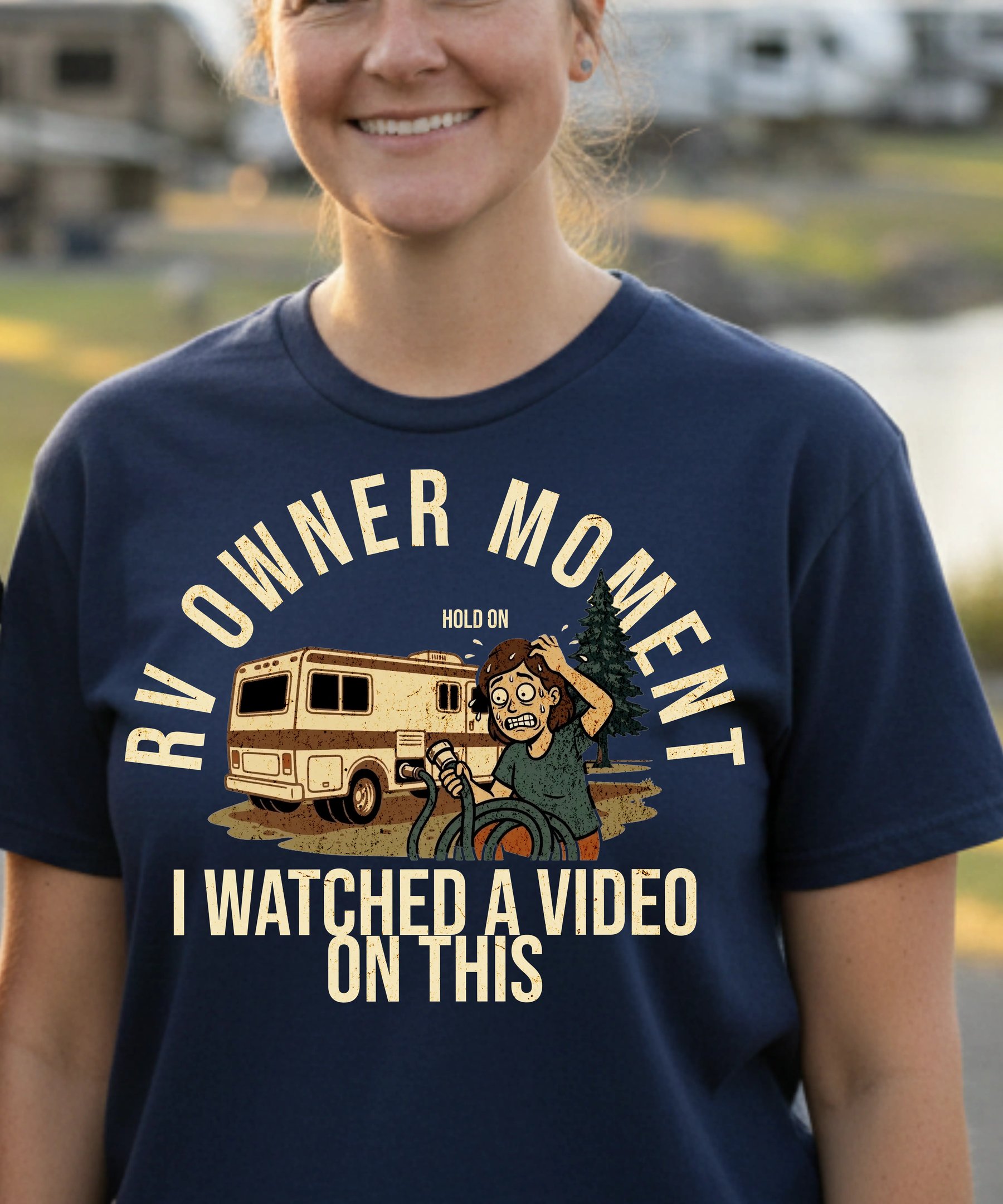
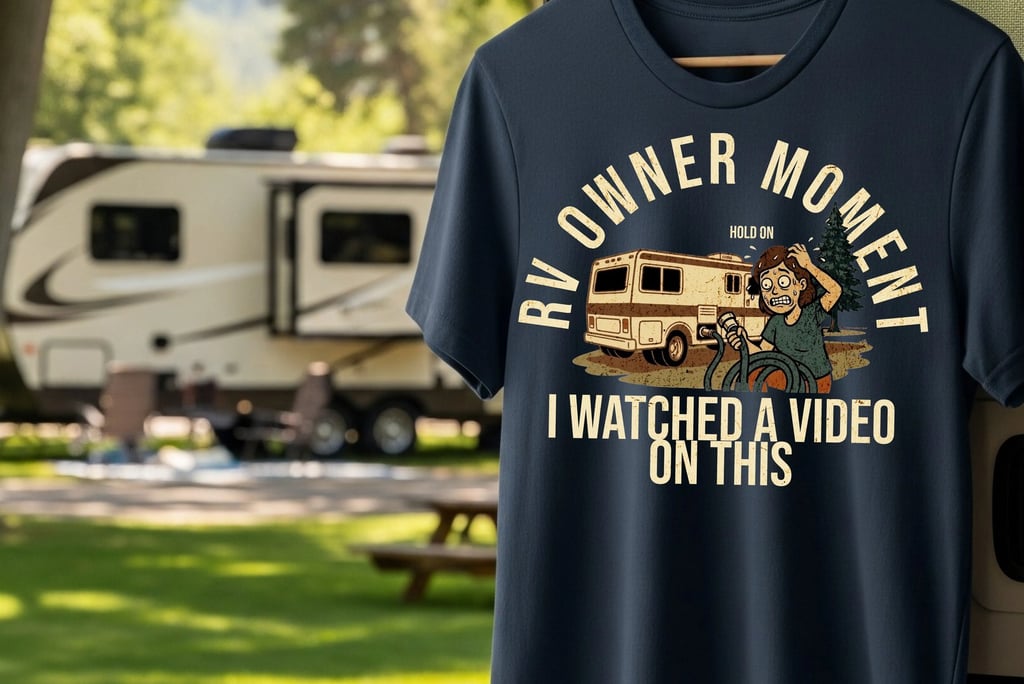
If you are standing next to your rig holding a sewer hose thinking "I definitely watched someone do this on YouTube" — we made a shirt for that exact moment. Check out the RV Owner Moment — I Watched a Video shirt at Horacio & Visconti RV Camping Shirts.
Most boondocking sites have a 14-day limit — your tanks will likely fill before that. Plan to find a dump station on your way out or between spots. Apps like Campendium and iOverlander both show dump station locations. Some truck stops, RV dealers, and campgrounds offer dump station access for a small fee even if you are not staying.
What to Do Before Your First Boondocking Trip
Do these five things before you go and the first trip will be significantly smoother.
1. Know your tank sizes — Look up your specific rig's fresh water, gray, and black tank capacities. You need to know these numbers to plan how long you can realistically stay.
2. Test your systems at home — Run your RV on battery power for an evening in your driveway. See what drains fast, what lasts, how long the refrigerator runs without shore power. This is much better to discover in your driveway than at a remote BLM site.
3. Check the rules for your specific location — BLM land, National Forest, state land — each has different rules for length of stay, fire restrictions, and whether vehicles can leave the main road. Look up the specific area on the land management agency's website or call the local ranger station.
4. Tell someone where you are going — Cell service is often limited or nonexistent at boondocking sites. Share your planned location and expected return date with someone before you leave.
5. Start simple — Your first boondocking trip should not be a remote canyon with no cell service and a 10-mile dirt road. Start with a Walmart overnight or a well-documented BLM area close to a town. Get familiar with how your systems perform before adding distance and remoteness.
Boondocking Gear Worth Having
You do not need a full solar and lithium battery setup to start boondocking. But a few items make a real difference.
A portable power station gives you extra battery capacity without any installation. Run devices off it during the day and recharge it during generator hours or via solar.
A water filter allows you to use water sources you find along the way rather than relying entirely on what you brought. A Sawyer or LifeStraw filter handles most natural water sources.
A composting toilet or portable toilet extends your black tank capacity significantly — especially useful for longer stays or rigs with smaller tanks.
A 12V tire inflator is worth having in any RV but is especially important for boondocking where getting a flat in a remote area is a real scenario.
And honestly — a good headlamp, a paper map of the area you are going to, and a full fresh water tank will take you further than any gear upgrade on your first trip.
The Boondocking Mindset
The biggest adjustment is not gear-related. It is the shift from unlimited resources to managed ones.
At a campground with full hookups you can run the air conditioner all night, take a long shower in the morning, leave lights on, and never think about any of it. Boondocking is a different relationship with your rig. You become aware of how much power the refrigerator actually draws, how fast a 5-minute shower drains a tank, what runs your battery down overnight.
Most people find this adjustment takes one trip. After that it becomes second nature — and the freedom of being able to camp almost anywhere makes it completely worth the learning curve.
We are still figuring it out ourselves. We are not full-timers yet — we are Carlos and Nancy, based in Tennessee, building toward full RV life one trip at a time. But every trip teaches us something new, and boondocking is one of the parts we are most excited about on the road ahead.
Keep Exploring
Before we wrap — if you are still building out your RV kit, our Gifts for RV Owners guide covers the practical gear every rig needs including surge protectors and TPMS. And if you are traveling with dogs, our RV life with dogs guide covers the specific considerations for boondocking with pets.
Boondocking is not as complicated as it looks from the outside. The systems are manageable, the land is publicly accessible, and the first trip teaches you more than any guide can. Start simple, know your tanks, fill up before you leave, and go find a view that nobody else is looking at from a campground parking space.
If you are building out your RV wardrobe for the road, browse the collection at Horacio & Visconti — funny RV camping shirts printed on Comfort Colors 1717, built for people who actually live this life.
© 2026 Horacio & Visconti. All rights reserved.